Description
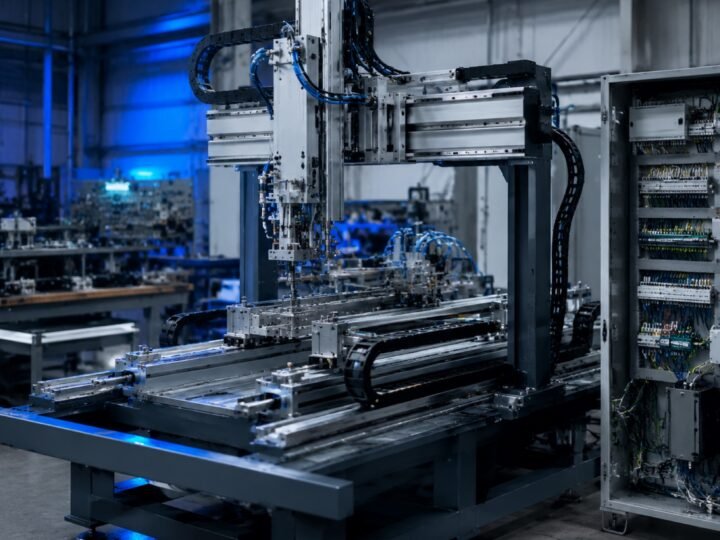
Most of the PLC work that reaches us falls into one of two situations. Either a machine is being built and the program has to be written from scratch, or a machine already exists and something about it has to change — a new station, a different recipe, a faster cycle, a controller that is no longer available.
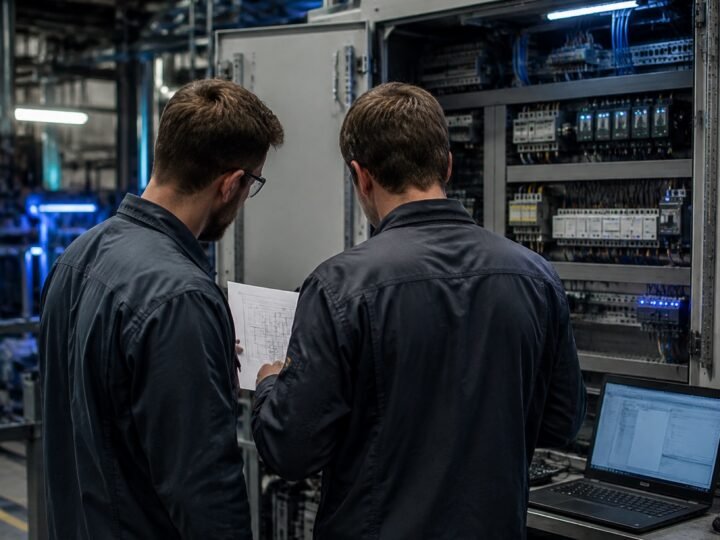
Both are handled the same way: understand the process first, then the electrical drawings, then the code. A program written without reading the schematic is a program that will surprise somebody during commissioning.
New PLC programming
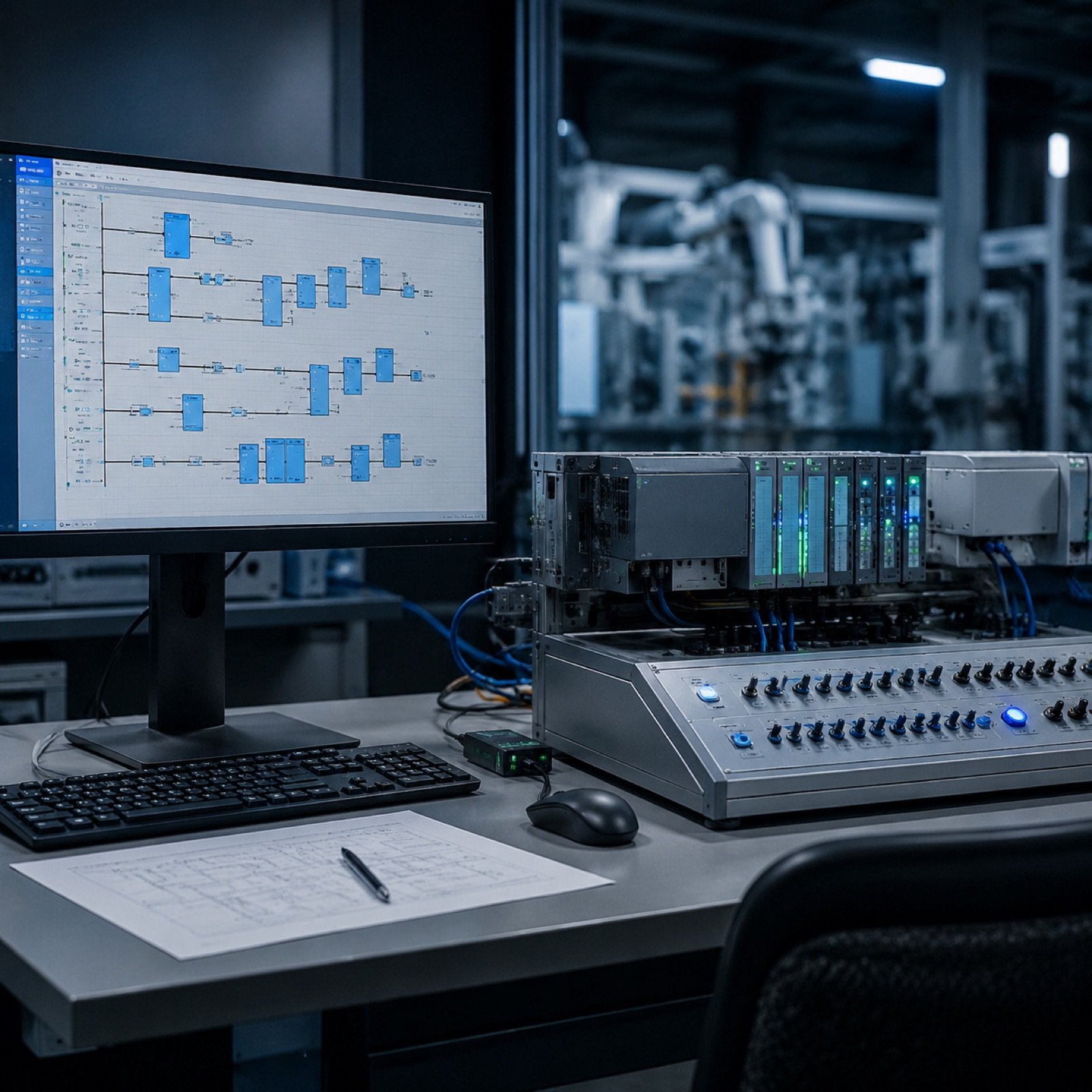
Structured programs built from reusable function blocks — one block per station or per device type, with a clear separation between the sequence, the manual controls, the alarms and the interlocks. Symbol names and comments are written in English so that your own maintenance team can follow them.
Deliverables are the project file, a printed or PDF program listing, the I/O list and a short description of how the sequence is meant to work.
Modifying a program you already have
We regularly work inside programs written by somebody else, sometimes ten or fifteen years ago, sometimes with no comments at all. The first step is always a full backup of the running program and a written note of what the machine does today. Only then does anything change.
Modifications are kept traceable: what was changed, where, and why. If the original program has no structure worth keeping, we will say so and quote separately for a rewrite rather than quietly building on top of it.
Logic optimisation
Cycle time is usually lost in three places: waiting on sensors that could be checked in parallel, movements that are sequential when they do not have to be, and timers that were set generously during commissioning and never revisited. Optimisation work starts by measuring, not by guessing.
Migration to a new platform
When a controller reaches end of life, the program has to move. Migration is more than a conversion tool run: addressing changes, instruction behaviour differs between platforms, and analogue scaling almost never carries over cleanly. We map the old I/O to the new hardware, rebuild the logic on the target platform, and test it against the original behaviour before it goes near the machine.