Description
A machine that stops for no obvious reason is expensive in a way that is hard to put on an invoice. Troubleshooting is about narrowing the possibilities quickly and in the right order — not about replacing parts until the symptom disappears.
How a fault is approached
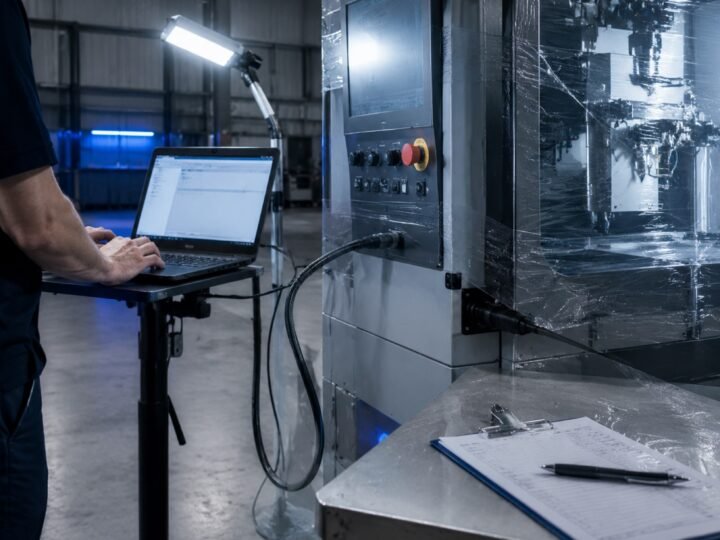
We ask for three things before touching anything: the current PLC program, the electrical drawings, and a description of when the fault happens. The description matters more than people expect. A fault that only appears after a long run points somewhere very different from one that appears on the first cycle after a power-up.
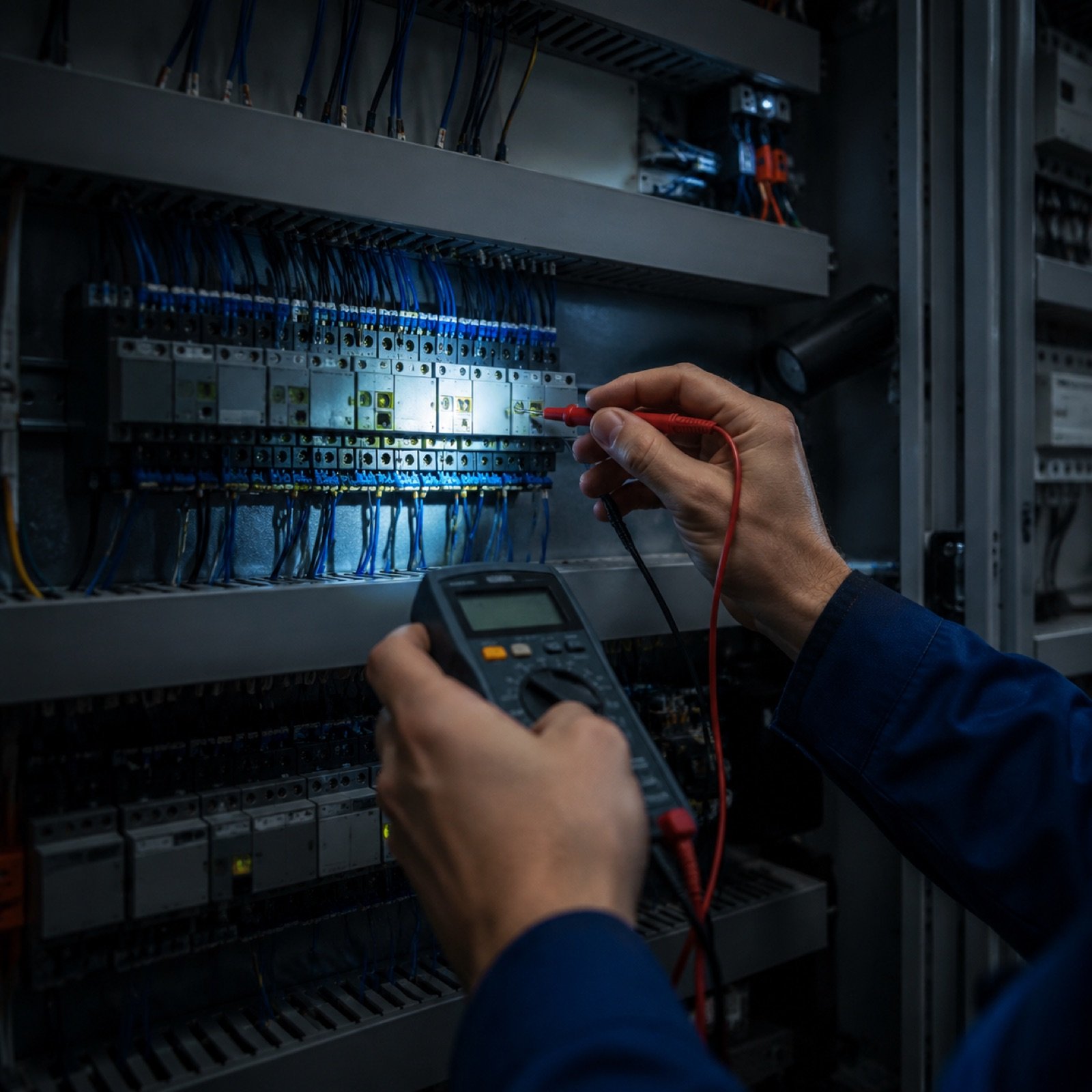
From there the work is systematic: read the diagnostic buffer, check the network, follow the interlock chain in the program, and compare what the code expects against what the field devices are actually reporting.
Faults we see most often
Communication drop-outs between a CPU and remote I/O, usually cabling or a duplicated address rather than a failed module. Analogue readings that drift or clamp, usually scaling or a shared ground. Intermittent stops caused by a safety device that is marginally out of alignment. And sequences that lock up in one specific state because a step condition can never be satisfied after a particular abort.
What you get back
A written explanation of the root cause, the change that fixes it, and — where relevant — what to check to stop it recurring. If the root cause turns out to be mechanical or electrical rather than in the program, we will tell you that too.